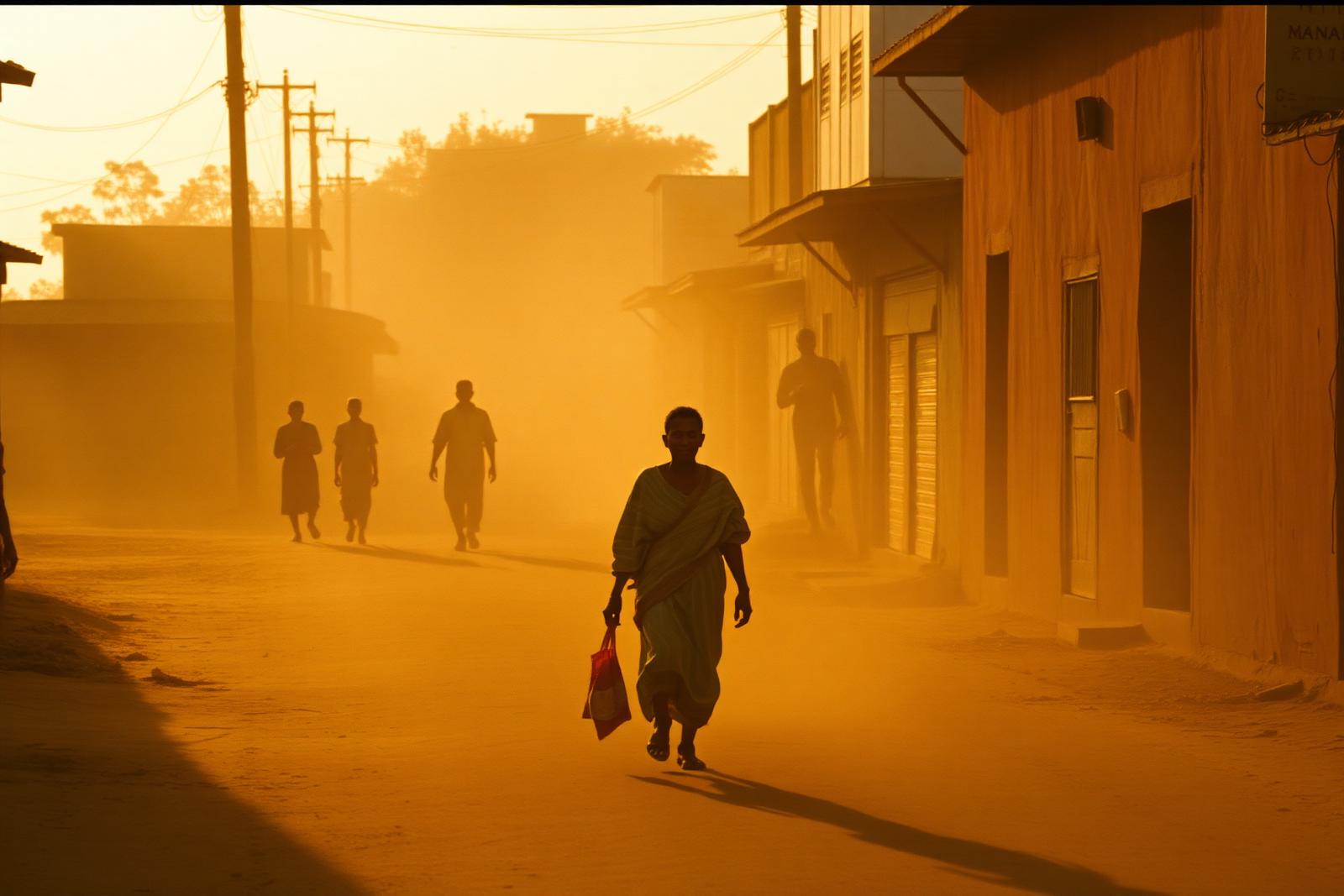
In 2014 I travelled through part of northern India and encountered very different ways of making the sacred visible. In palaces, on the banks of the Ganges and inside a temple inhabited by thousands of rats, faith and everyday life did not seem to occupy separate spaces.
The journey began in New Delhi and continued through Rajasthan: Jaipur, Jodhpur — the Blue City —, Jaisalmer and the Bikaner area. I then reached Agra for the Taj Mahal and Varanasi in Uttar Pradesh. Reducing it all to an itinerary, however, conveys little of the density of what happened in the streets, temples and along the river.
Varanasi and the Ganges
Varanasi affected me most. Walking along the ghats meant seeing the river as a religious, social and everyday space. At the cremation ghats I witnessed open-air funeral pyres and a direct relationship — radically unfamiliar to me — between the city, death and water.
That memory requires precision. In the Hindu tradition practised in Varanasi, cremation beside the Ganges and the immersion of ashes are linked to the hope of liberation from the cycle of rebirth. I do not want to turn a complex rite into a sensational image: what struck me was precisely the absence of the separation I was used to seeing between death and the rest of life.
Karni Mata and the sacred rats
In Deshnoke, about thirty kilometres south of Bikaner, I visited the Karni Mata Temple. It is known for the many rats that live there and are fed and protected by devotees. Rajasthan's tourism authority explains that they are considered sacred and associated with Karni Mata and her descendants.
rats in the temple according to the estimate commonly reported
Among the black rats, visitors look for the extremely rare white ones: seeing one is considered auspicious. The number is an estimate rather than a census, and the legend exists in different versions. What interested me was not deciding whether to believe it, but seeing how an animal that provokes disgust elsewhere could become the focus of care, respect and anticipation.
Not understanding immediately
The Taj Mahal, Jodhpur's colours and Rajasthan's forts were extraordinary sights. Yet the memories that continued to work on me were the ones that were harder to interpret: the Ganges and Karni Mata. In those moments, travelling did not mean finding a quick explanation. It meant accepting that the categories I had arrived with were not enough.
Photography had also taught me to suspend judgement and observe. In India, that lesson became unavoidable.