An event leaves a mark when content, space, rhythm, production and people all tell the same story. If one of these elements is treated as an accessory, the audience senses the disconnect even when they cannot name it.
I have worked in photographic and audiovisual production, project management and the development of initiatives such as TRIALISM. These settings taught me that an event is not a schedule placed inside a room. It is a temporary system in which every choice influences people's behaviour: where they stop, whom they speak to, when they pay attention and what they remember afterwards.
Success does not depend on a single spectacular moment. It depends on many coherent, often invisible decisions. Some concern the content; others concern spatial flow, duration, technical transitions or how the team responds to the unexpected. Production exists to hold these decisions together, not merely to execute them.
Content needs a reason to be there
The first mistake is filling the programme before defining what should happen to the people attending. Content may be interesting in itself and still be irrelevant to a specific event. Selection should begin with a question: what understanding, conversation or energy do we want to make possible? Only then does it make sense to choose formats, contributors and duration.
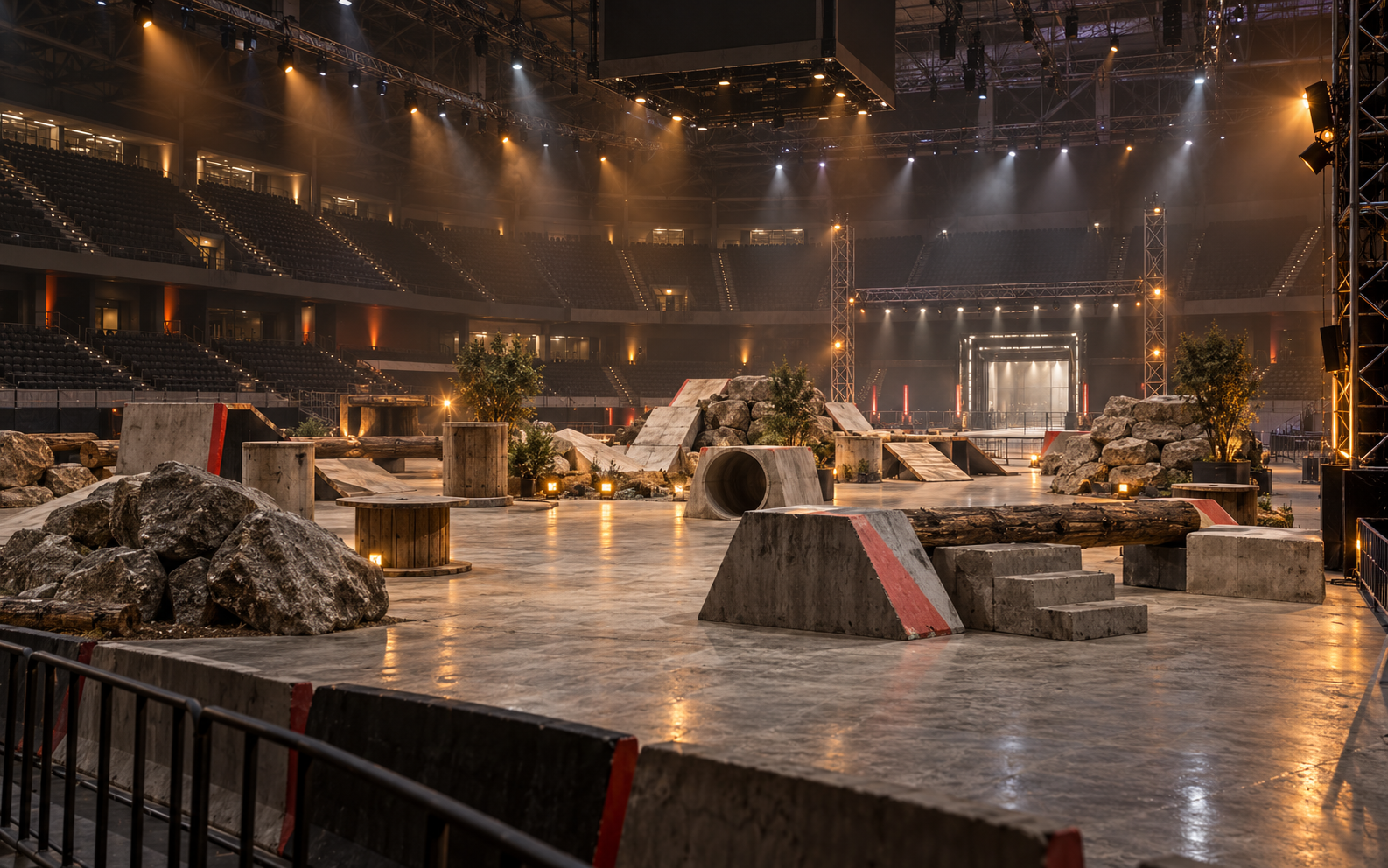
This is especially true for events that are not conferences. In a project such as TRIALISM, for example, quality does not depend on a succession of speakers. It depends on the relationship between practice, storytelling, encounter and participation. Content may be an experience, a demonstration, a conversation or a space in which the audience creates something. Calling everything a stage narrows the possibilities before work has even begun.
Space writes part of the programme
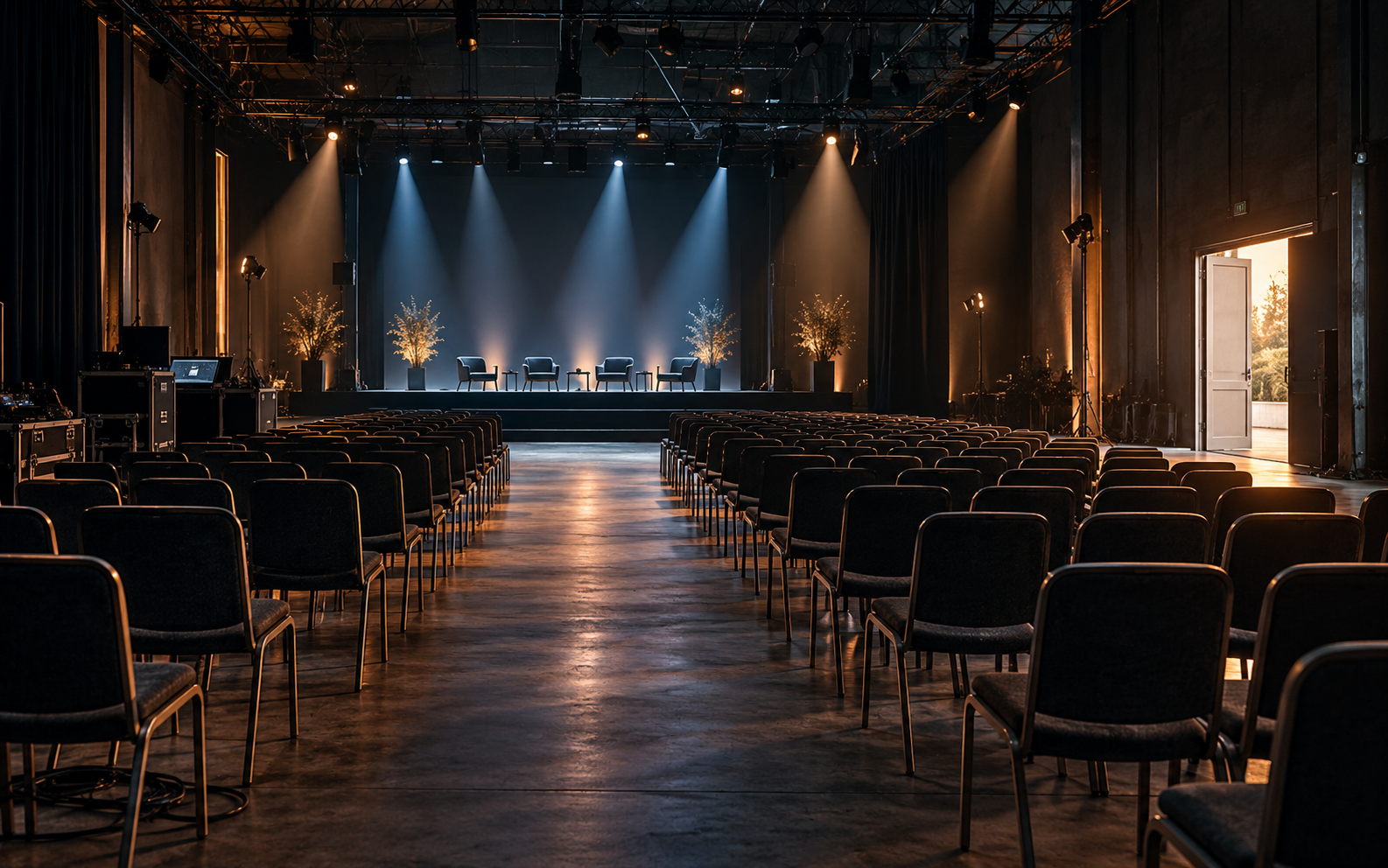
A space is never neutral. Rows of chairs direct people towards listening; a shared table suggests discussion; excessive distance between two areas interrupts the flow; a narrow passage may become either the place where the best encounters happen or a queue that breaks the rhythm. Design should examine the programme from the perspective of bodies, not only from the floor plan.
Signage, light, sound and pauses also participate in the content. If a conversation needs intimacy but is placed beside a noisy activity, production contradicts the intention. If people do not understand where to go, every transition consumes attention. Caring for the space means removing friction so that people can focus on why they came.
Rhythm is an editorial responsibility
Rhythm is not the same as punctuality, although punctuality helps. It is the alternation between intensity and breathing room, listening and participation, collective moments and smaller conversations. An event may run perfectly on time and still feel exhausting because it leaves no room to process what is happening. Valuable content can also be lost in transitions that are too long or repetitive.
Designing rhythm requires giving things up. Adding one more element always appears to enrich the programme, but often takes space away from everything else. A genuine break can create more value than an additional session because it allows people to meet and connect what they have just experienced. Empty space at an event is not necessarily wasted time; it may be where content becomes relationship.
"The rhythm of an event is not how quickly things happen, but how much room we leave people to make them their own."
Production protects people
Behind an event are people working under pressure, suppliers, partners, guests and participants with different needs. Solid production reduces uncertainty through clear roles, accessible information, realistic time buffers and alternatives for fragile steps. It cannot remove the unexpected, but it prevents every unexpected event from becoming a collective emergency.
Care also applies to the people attending. Accessibility, welcome, realistic timing and understandable information are not logistical details separate from the experience. They are how an event declares who is entitled to be there. An ambitious concept loses credibility when people must fight the system to experience it.
What remains after the lights go out is not only a visual memory. It is the quality of the conversations, the feeling of having been considered and the possibility that an encounter will continue elsewhere. Building events that leave a mark therefore does not mean pursuing effect at any cost. It means composing content, space, rhythm, production and people precisely enough for each to strengthen the others.
The phase after the event is as much a part of the project as opening the doors. Recording what happened, thanking people specifically, returning materials and listening to participants and workers helps separate the immediate impression from what can genuinely improve. Prompt administrative closure also protects relationships: suppliers paid, commitments honoured and information organised. Without this tail, every new edition begins more tired, while visible success is paid for by invisible work left to others.
Continue with the invisible work behind an idea and the TRIALISM experience.