
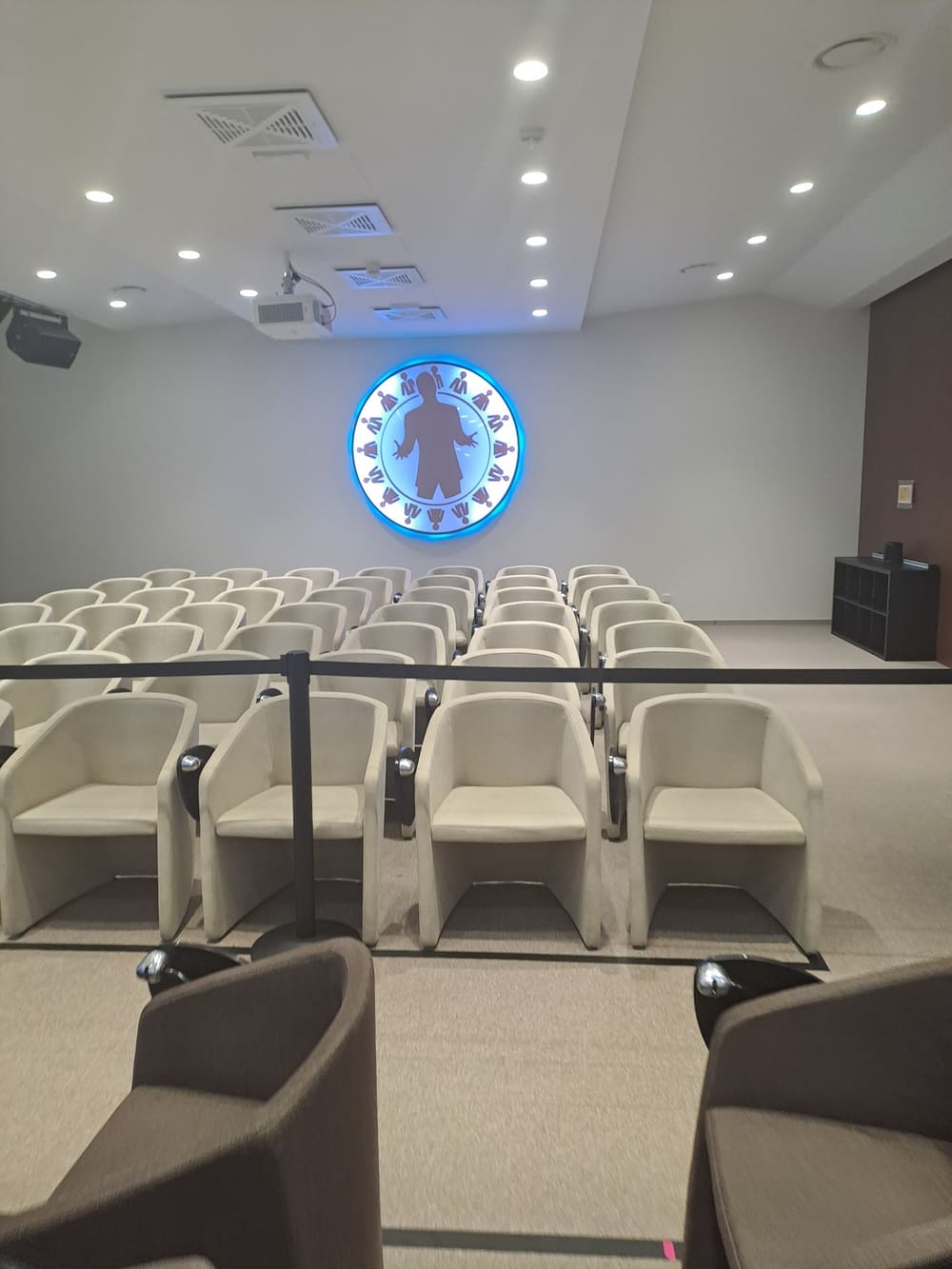
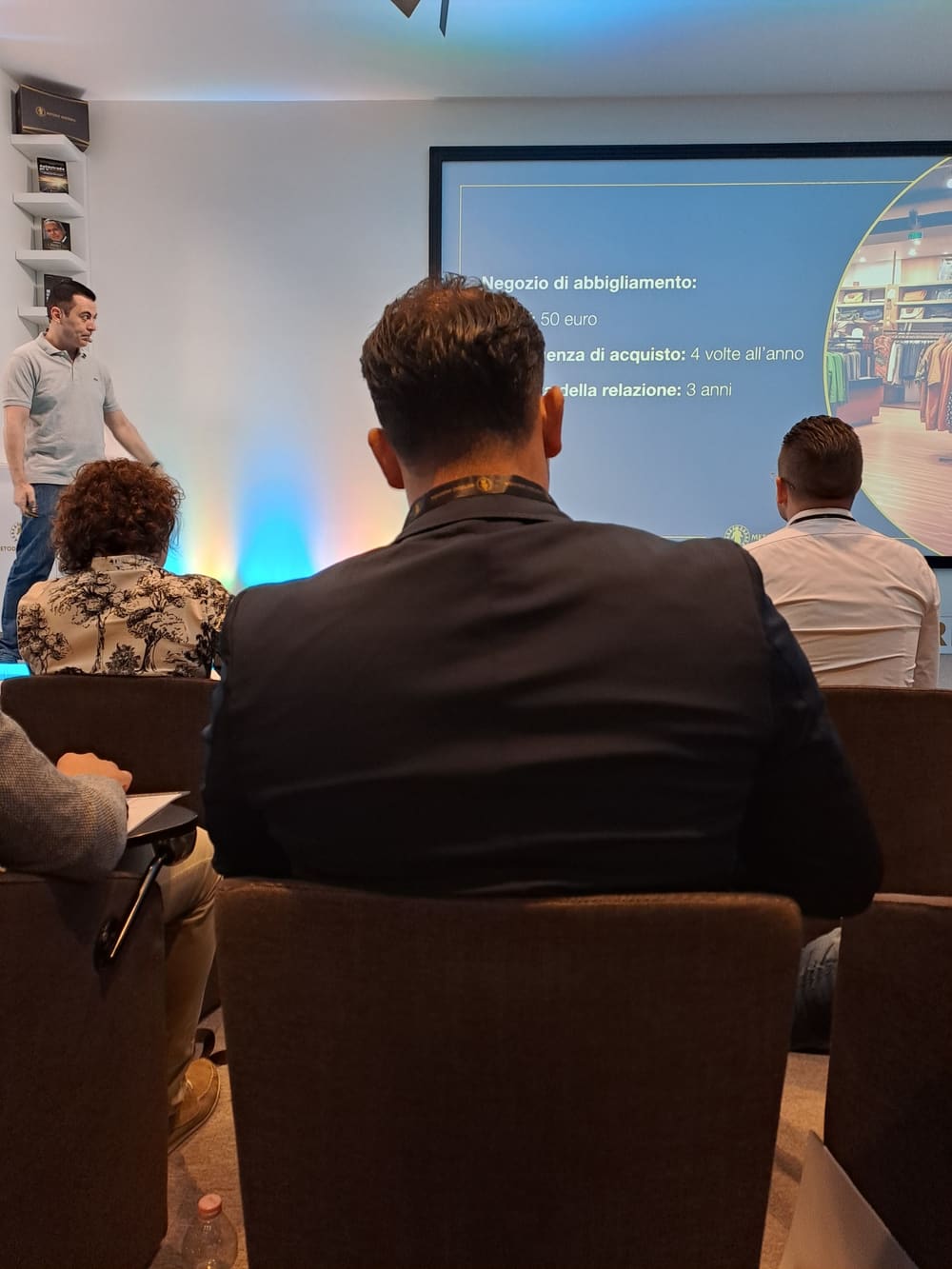
In July 2024 I attended a course at Frank Merenda’s academy in Mendrisio, focused on marketing and positioning. These subjects run through my work: first in communication and project management, then increasingly in business development. This training sat at the point where those areas meet.
When you prepare a proposal or present a project, a good idea has to answer practical questions. Why should the customer invest? What changes compared with their current solution? How much work will choosing a different approach involve? Marketing develops part of the answer; the sales conversation tests the rest.
Frank Merenda and the relationship between marketing and business
Merenda is an entrepreneur and trainer whose work focuses on marketing, sales and business management. Positioning is a central theme in his public work, alongside offer development and professional selling. His style is direct and often provocative, with training aimed at concrete business questions.
That approach is relevant to someone with a communication background and agency experience. The quality of the message matters, but it needs an economically sound offer, people who can handle enquiries and an organisation able to deliver its commitments. Studying these stages together helps identify where a proposal may lose strength.
Positioning should help the customer choose
An offer can be carefully developed and still be hard to distinguish. Expertise, availability and customer care are important requirements, but alone they say little about the particular problem a business is equipped to solve.
This becomes clear in B2B work. Someone considering consultancy or software may compare suppliers, postpone the decision or keep their existing system. A proposal needs to make both its usefulness and the reason to change understandable. Specifying the audience, the needs addressed and the scope of the work is already an important part of positioning.
This is the ground covered in my article on strategic communication: choices about the audience and the offer come before the words used to present them.
Sales tests the promise
The connection between marketing and sales is a subject I consider particularly useful to explore. Interest generated by a campaign can be real without being enough to start working together. During a negotiation, priorities, constraints, timing and responsibilities emerge that an initial presentation may have left out.
For someone who also works as an account or project manager, there is another stage: what is sold needs to be delivered. An overly broad or poorly defined offer may make the first conversation easier while complicating everything that follows. Clarifying the scope, understanding expectations and discussing a project’s limits are part of the service’s value.
The relationship between proposal and delivery runs through my experience with Bloxi and my approach to selling and listening to customers.

Measuring results, beyond activity
Marketing training is useful when it makes you choose what to measure. Enquiries, meetings, proposals and customers are different stages. A large number of requests does not establish whether the right people are interested, whether negotiations reach a decision or whether the work won is economically sustainable.
It helps to examine the whole sequence: where an enquiry comes from, the need behind it, how it is handled, which objections emerge and what happens after the proposal. Greater visibility will not solve every problem. Sometimes the offer needs clarification; sometimes the handover between marketing and sales or the way an enquiry is followed up needs improvement.
Three points to bring into the work
The value I see in this kind of training lies in comparing it with everyday decisions. For my work across marketing, sales and projects, there are three points to keep together:
- ●Define who you work for and which need you address before designing the communication.
- ●Make the offer’s value understandable during negotiation and sustainable during delivery.
- ●Read results across the entire sales process, beyond the number of enquiries.
These are not a formula to apply identically to every company. Markets, product complexity and the people involved in a decision differ. Those differences are where training can help a professional: it allows different approaches to be compared and work decisions to be considered more precisely.