The Okavango's flood depends on a basin extending beyond Botswana. Choosing a trip therefore requires questions about the precise location and proposed activities as well as dates: the general water cycle does not guarantee conditions during an individual stay.
Before choosing a journey to the delta, distinguish water falling locally from water arriving through the basin. They do not necessarily follow the same calendar.
A landscape beginning before Botswana
UNESCO describes permanent wetlands and seasonally flooded plains in northwestern Botswana, where the annual flood arrives during the dry season. 1 OKACOM explains that the basin connects Angola, Namibia and Botswana and receives its main flow from the Angolan highlands. 2
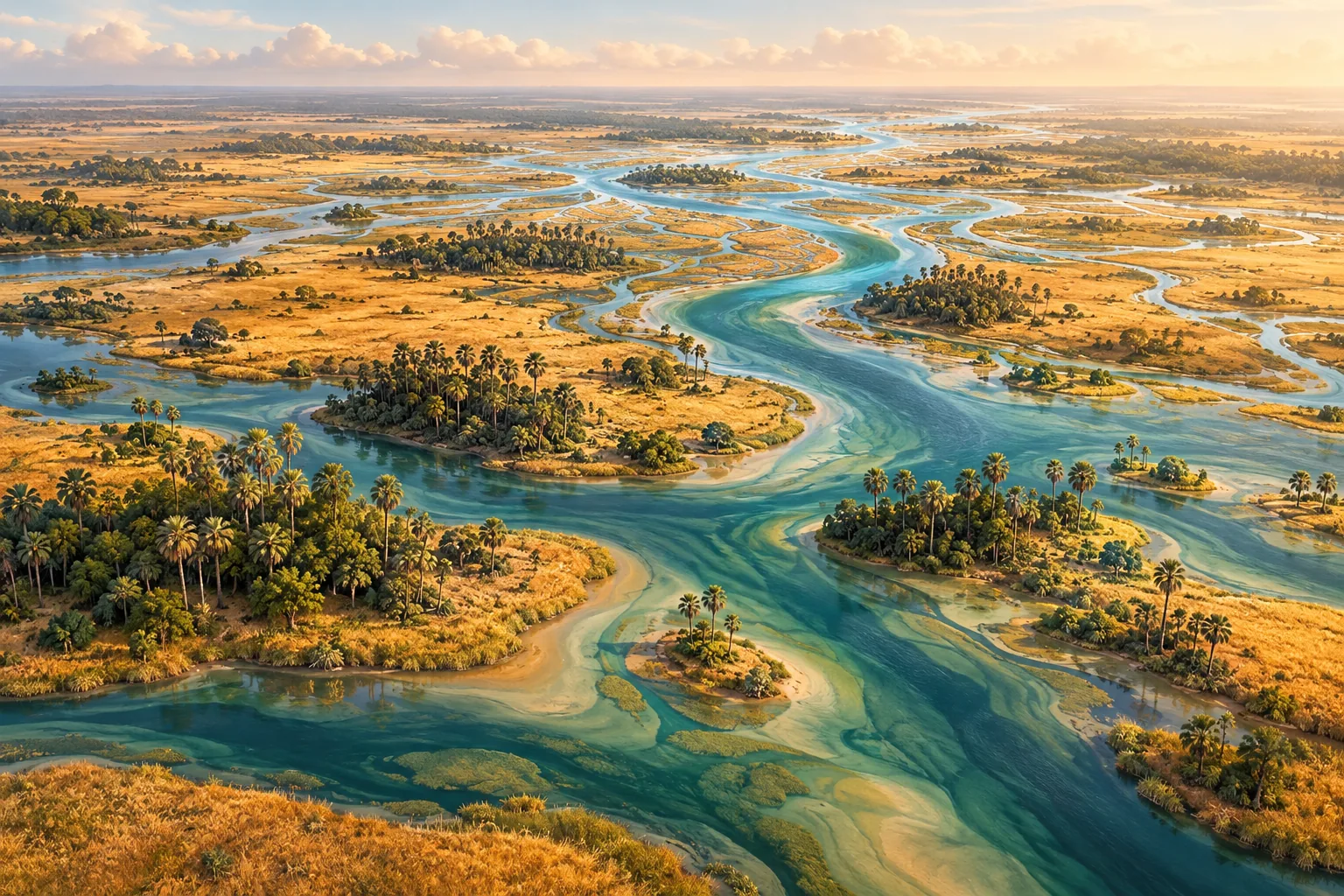
For planning, the implication is a question rather than a promise: what conditions are expected in the specific area where you will stay? One photograph of a channel cannot describe every possible experience in the delta. Looking only at local weather leaves part of the picture unexplained.
Choose the experience before comparing dates
Write down what matters before asking for the best month. Is it observing from a vehicle, spending time with the landscape, including a water activity where conditions permit, or staying several nights in one place?
Turn those preferences into questions for the operator. Which activities are included? Which depend on water levels? What alternative is offered if something cannot take place?
“Okavango” is a destination name, not a complete description of a stay. This article provides no current flood measurements and makes no promise about navigation, sightings or individual services.
Count the time between arrivals and departures
A proposal may appear rich because it lists many places. Temporarily remove their names and look instead at arrivals, departures and the usable time remaining. How much room is left to observe?
For photographers, that helps distinguish the number of locations from opportunities to pause. Asking for a less fragmented day is a planning choice. Expecting a particular animal to appear is something different.
The same exercise can help a mixed group make preferences explicit before travelling. A longer stay or fewer transfers may suit some people; others may prefer more movement. The value lies in making the trade-off visible rather than treating one itinerary style as universally superior.
A river basin with people in it
OKACOM also describes farming, livestock and the use of fish and vegetation within the basin. 2 Conservation therefore belongs within a wider discussion about livelihoods and water management.
For a visitor, this is a reason to ask what sustainability means in a particular proposal: who provides the services, which commitments can be checked and what information is available?
These are editorial assessment questions. The sources do not certify an individual lodge or operator, and an appealing description cannot supply that missing evidence.
The same destination name can describe different journeys
Imagine two hypothetical itineraries both offering two nights in the Okavango. One specifies the area and included activities. The other provides only the destination name and a photograph of water. There is not yet a common basis for comparing prices.
Ask for a short description covering the stay's location, access arrangements, daily organisation, included activities, conditions and alternatives. These are information requests, not services promised by this article.
“Included” also deserves clarification. Does it mean an activity has been defined or that it may take place if conditions permit? If a preference determines whether someone books, that preference and the treatment of possible changes should be discussed before confirmation.
Read a photograph without turning it into a forecast
A photograph belongs to a particular place and time. Using it to assess a proposed stay requires that context and an explanation of its relationship to the trip. It may illustrate a landscape without establishing conditions for the chosen dates.
Other travellers' accounts need the same care. A positive experience is useful information, but it does not make two stays identical. Ask what remains comparable: area, duration, activities and organisation.
For photography, clarify another preference: is the aim a list of subjects or time to observe? These are different wishes. Naming them cannot guarantee a sighting, but it helps establish whether the proposed pace suits the intended experience.
A well-explained uncertainty can be valuable information too. Knowing what will be checked again and when is more concrete than receiving an unconditional reassurance. This is how understanding the water cycle becomes part of preparing a trip rather than a geographical fact detached from decisions.
The planning conversation should leave a record of these distinctions. Once a proposal arrives, the original preferences can be compared with its actual contents instead of relying on the appeal of a destination name.
Before choosing
Bring three things to the conversation: possible dates, the experience that matters most and your flexibility. Then request a proposal distinguishing confirmed activities, conditional activities and alternatives.
Understanding the water's journey does not replace planning. It helps planning begin with a better question.
Is knowing the month enough?
Ask about location, planned activities and alternatives too.
Does this describe the current flood?
No. It explains the general cycle.
For the broader planning approach, see organising the decisions behind a journey.
The question of usable time also appears in assessing a Namibia itinerary: a proposal becomes clearer when days are examined alongside destination names.